willedoo
-
Posts
8,560 -
Joined
-
Last visited
-
Days Won
155
Content Type
Profiles
Forums
Gallery
Downloads
Blogs
Events
Our Shop
Movies
Everything posted by willedoo
-
I was once told by a bloke at CIG when it went by that name, that the rental was to cover cost of handling. That's obviously BS, as a farmer who uses one bottle every two years pays the same rental on that one bottle as a business who uses a bottle per week. In one case the bottle is handled once in two years, in the other case it's handled 104 times in two years for the same rental fee. It was good back in the days before they bar coded the bottles but I always knew they would code them one day and stop people dodging the rental..
-
Another factor is that you know BOC as a long term trusted supplier who will always be supplying the product. Bunnings goes through a few fads, so you couldn't be confident they would still stock the product in a couple of years time.
-
Not really a random thought, but for want of a better place to post - there's often a catch with things. I use D size oxy/ acetylene bottles which I rent from BOC (formerly CIG) at a rental cost of $187 p.a. for the two bottles. Someone suggested getting them from Bunnings as they don't charge yearly rental. The catch is they hold a deposit of $200 per bottle, so you have to give Bunnings over $600 to walk out the door with 2 D size bottles, that's including the gas refill cost. After having the bottles for two years you would break even compared to renting them from BOC and be ahead after that. It's no cheap solution.
-
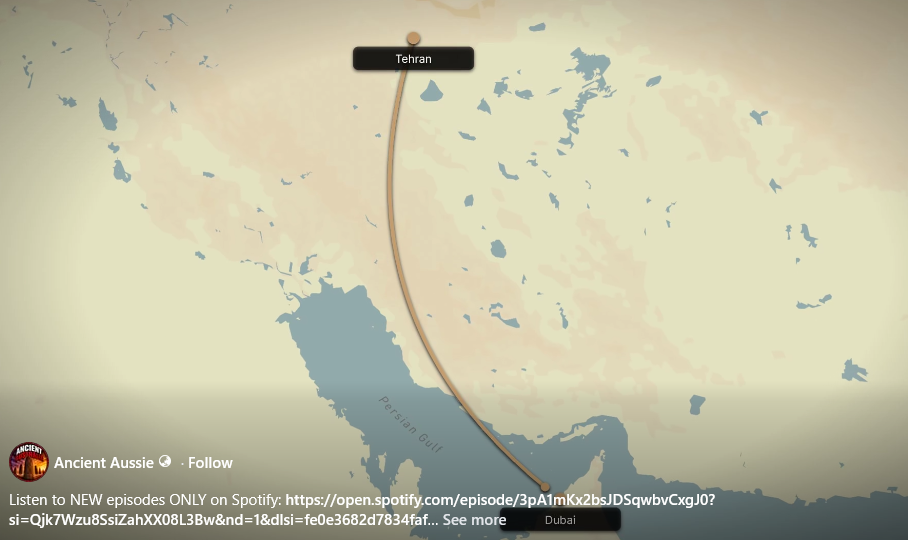
There's some interesting stuff in that short documentary, but quite a few strange things as well. When the narrator was talking about the quarries in the Qld. channel country mining stone on an industrial scale and traded across the continent, they showed this photo with no explanation of what Tehran and Dubai had to do with it.

-
On the positive side with that WLA, the price is right and most of it is there to bring it back to original. Just a matter of finding a front wheel and guard and a few small bits, sell that seat to a hooligan and get rid of a lot of chrome.
-
Marty, another thing to consider is what the starting point is. That WLA Harley may or may not have started out as a complete bike, but even if it was built up from parts, the majority of it is there to turn it into a proper WLA instead of a clown bike. With hot rods, it's not good to chop up a classic car which sometimes happens, but with a lot of hot rods, probably most, there's often very little of the original car present. A lot start out as an old rusted body found in a paddock and the finished product only has part of that body with the rest being a custom chassis, add-on engine, transmission and the rest of it. So no, I couldn't say the same for any hot rod. With a found body that's in poor condition, to bring it back to original involves a lot of time and money tracking down original parts. That's where the hot rodders come in, using that body basically as the decoration on top of a custom build.
-
Just to clarify, when I mentioned engraved stone, I mean stones and pieces of stone, not wall art engravings.
-
Even with the rare chance they were shards of engraved stone and not pottery, they didn't engrave stone for decoration like that. They did as a form of writing or messaging with engraved stone message sticks but it usually consisted of a series of lines. Similar with a couple of other type of stone artifacts that are best not mentioned out of respect for cultural sensitivity.
-
Thanks ome, I found it and it's total BS, probably put there for a bit of dramatic effect.
-
I'm missing something here, have rewatched it and still can't find the mentioned pottery images.
-
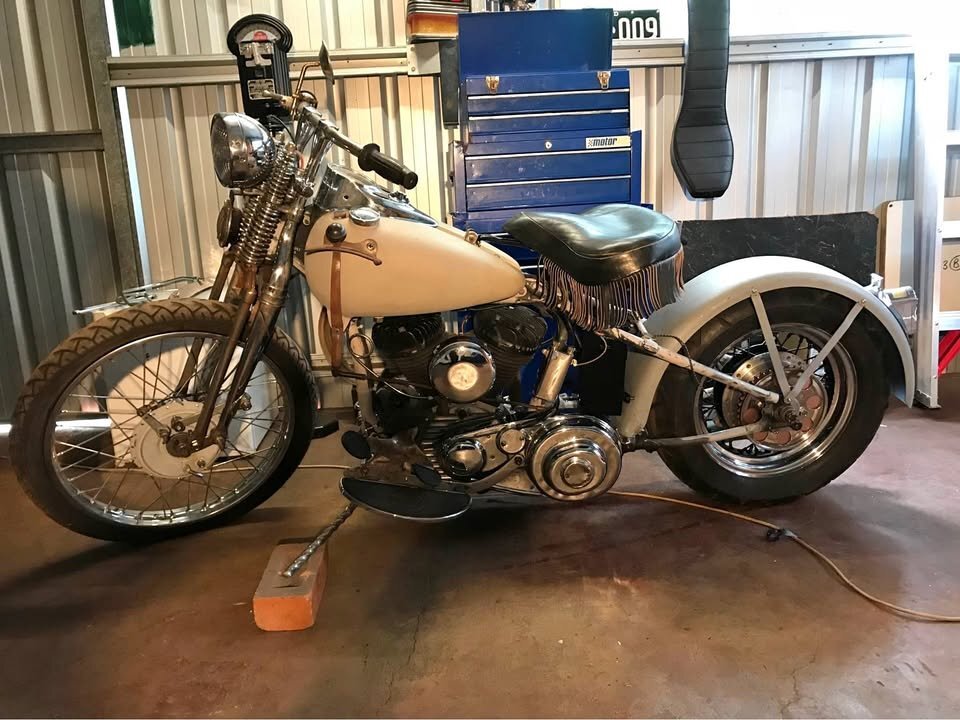
I saw this bit of sacrilege on marketplace. I know it's horses for courses, but I can't figure out who in their right mind would do this to a WLA. There's not too many worse sights on the planet than a standard Harley springer front end that's been chromed. And I won't even start on the chaincase, or the funny front wheel, or the frilly seat. There should be laws against it. If you want to build a chopper, build a chopper, but a chromed bobber is neither here nor there, just a waste of a good classic bike from where I look at it.
-
One day it will be government by AI, no pollies to complain about. Probably not in my lifetime, or at least I hope not.
-
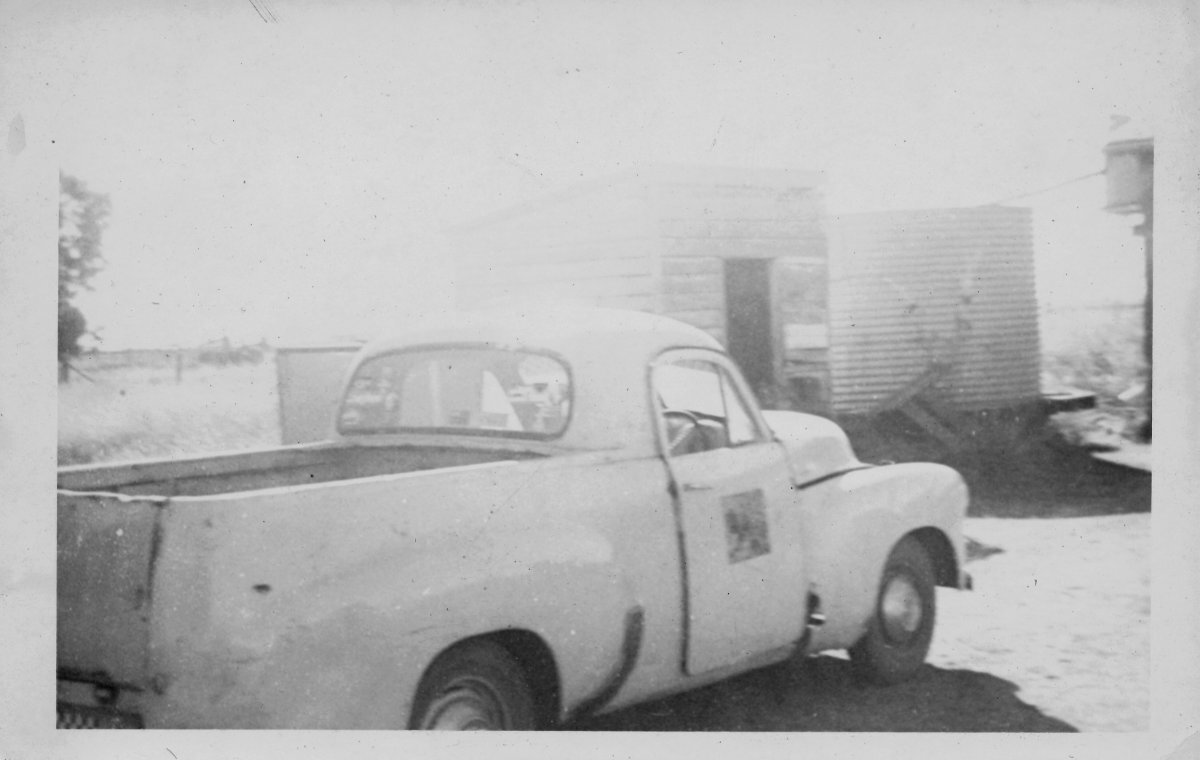
Here's another old and not very good photo. It's the FJ ute I learned to drive in. My dad bought it second-hand in 1961. It was that old light green Holden colour. It had some lead bog in it from a previous rollover repair. I was a late starter learning to drive and would have been nine heading toward ten. Reason was, I was a bit shorter than average as a kid and had to wait until the legs were long enough to reach the pedals. Once the legs grew enough, it was just a matter of packing enough pillows behind the back to be able to sit close enough to the wheel to reach the pedals. I had mates that were driving trucks by that age as they were that much bigger. I didn't get a burst on until grade 8 when I grew about a foot in one year. I remember that old ute toward the end of it's life had the tie rod ends held together with wire. It would occasionally come undone and the ute would head off the track into the paddock. We had a Dachshund that loved that old ute. She could perch her rear legs on the seat back, and with her long body, get the front legs right out on the window sill for a bit of wind surfing.
-
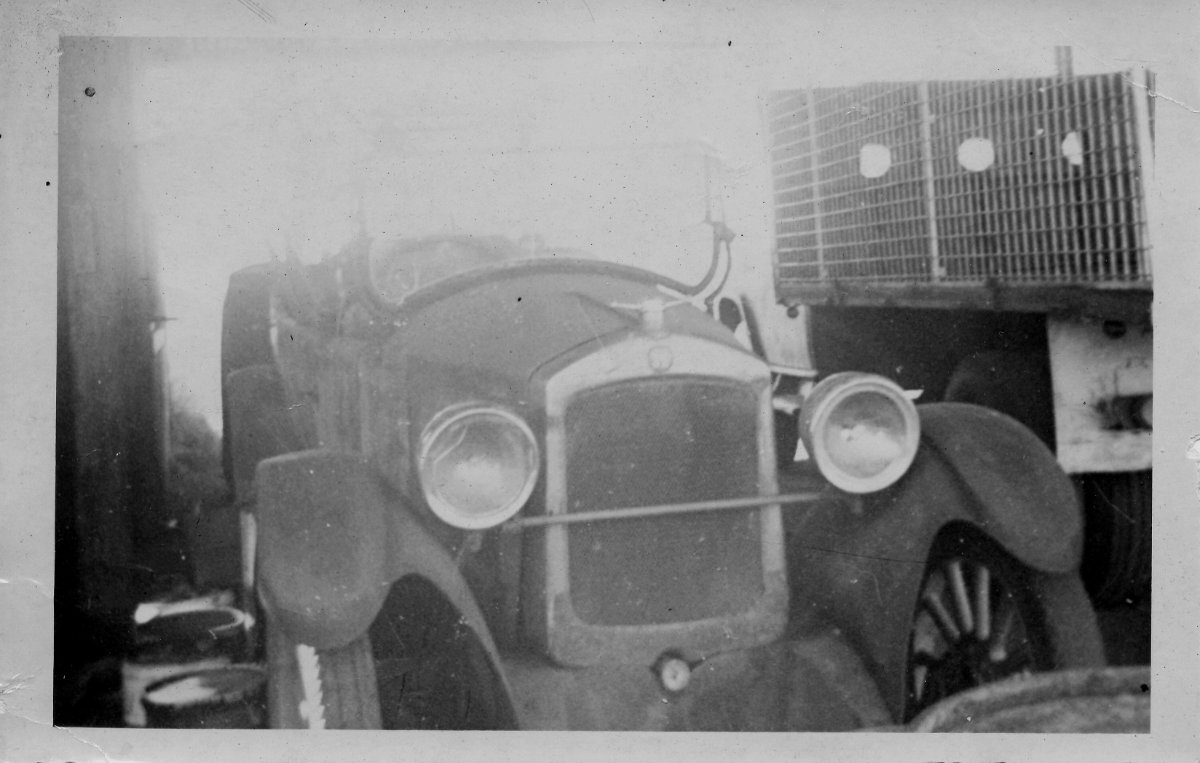
This is an old photo, but this 1924 Hupmobile is still in the family; grandfather bought it new.
-
And the recycled pollies PHON have at the trough are different in what way, exactly? Jerry, they've done something else before politics. They've had real jobs and careers. It's not hard to research. Pauline fried fish, Barnaby was a bean counter, David Farley started out as a jackeroo and ended up CEO of Australia's largest agricultural company, NSW leader Mike Newman is a former investment banker and NSW trade commissioner to Japan, Luke Herdegen who just won the WA byelection is a small busnessman who owns gyms, Tyron Whitten the WA senator is a former concretor and business owner, Rod Caddies the WA leader has worked in child protection, construction, mining and as an ADF reservist, and that's just some of them. Even Malcolm has had real jobs but I reckon he's too nutty to talk about.
-
I wonder if they'll have the warder on the horse with the pilot sunglasses and the shotgun.
-
I can relate to that, having never owned a new car. The newest I've bought were a couple that were around six to seven years old. Most have been in the ten to fifteen year old range. I never saw the point in going tens of thousands of dollars into debt to buy a new car when a good second hand one costing a few thousand does the same job.
-
Just to clarify, Marty. The Haha icon I left on your post is not to put shite on the post; I just thought your post was a rather witty response.
-
I think one reason the Greens have only appealed to one in ten voters is that they have some sensible policies that appeal but a lot that don't. I understand why they don't broaden their scope as it would entail getting away from their basic brief. A lot of people don't like their politics; they see them these days as more a party of protest than a party of trees. There's many reasons why the Greens don't have broad appeal. The people there have a bit to do with it. Many see them as a bunch of nutters. If they were any better, they'd get more votes, but I think they've hit their peak. They're often their own worst enemies. But they do provide a niche vote for some people.
-
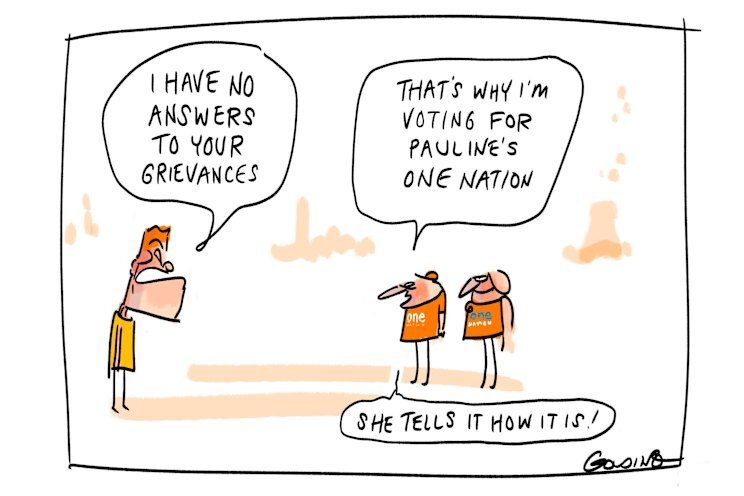
Going back to that assessment and prediction from Tony Barry of Redbridge Group, here's a quote of his opinion (based on polling) on reasons behind One Nation support: “For about 15 per cent of One Nation voters, they self-report immigration as their key consideration. But for most, they’re looking for an anti-establishment party. It’s a rejection of the two-party system,”
-
I think I'm on my last car. It's a diesel, 240,000 on the clock and I'd probably only do about 10,000 per year these days. Most likely lose the license before the car wears out.
-
I will if I ever get a frontal lobotomy first. I do give them full credit for trying in our area. They have well meaning candidates who front up every election but they just never get enough numbers in our electorates. They were a bit comical last election. They all dressed up in khaki for their corflute photos, probably thinking it would make them look very green like park rangers. It was like looking at the Irwins on the Australia Zoo ads every time you drove past a Green corflute. Having said that, if they'd been in local government over the years, the environmental destruction from over development around here would be a lot less for sure. A certain amount is due to state government but the council has a big say in town planning and development.
-
We'll all be rooned.
-
There's some interesting numbers in the upcoming Victorian election. The lower house has 88 seats currently consisting of Labor 56, Liberal 19, Nationals 9 and Greens 4. That gives Labor a buffer of 11 seats, meaning they could lose 11 seats and still govern in their own right with a majority of 1 at 45 seats. If it came down to the wire they've always got four greens for minority government support if the Greens retain their seats The blokes from Redbridge are constantly crunching numbers and polling figures. Kos Samaras has identified 11 seats with very similar demographics to the wipe out of Labor in Secret Harbour, WA. According to him, Labor can almost safely write those 11 off to One Nation, with a twelth seat being one to watch as the demographics of diversity split between the north and the south half of the electorate. His partner Tony Barry is tipping a Labor loss and that the Coalition will get a majority in their own right without needing the support of One Nation. He said a lot of the eastern seats that were formerly Liberal heartland are swinging back to the Liberals, and that is the problem for Labor. Seats with a high diversity (high migrant population) are polling up to 70% primary vote for Labor, so they should have no problem holding those. Victoria is the only state where the Liberals are polling better than One Nation.