
willedoo
-
Posts
8,560 -
Joined
-
Last visited
-
Days Won
155
Content Type
Profiles
Forums
Gallery
Downloads
Blogs
Events
Our Shop
Movies
Everything posted by willedoo
-
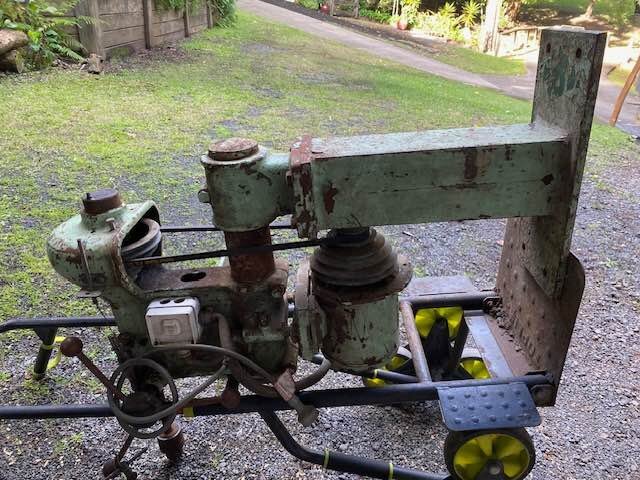
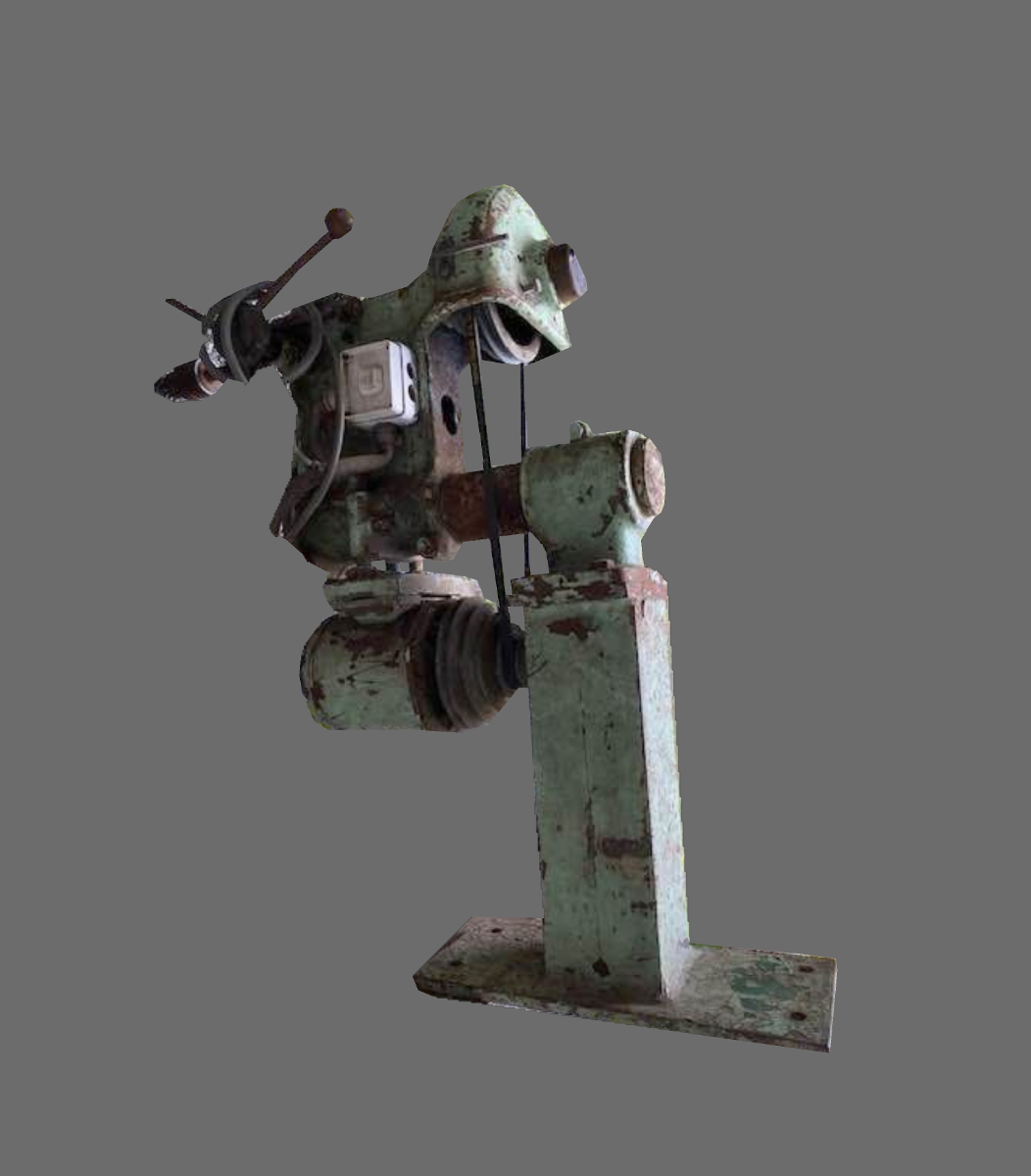
I love old industrial machinery. Today I picked up this old J.S. Richardson drill on marketplace and couldn't resist it for $50. There's way more value than that in the steel, electric motor and other components. Good old drills, made in Sydney in the days when we manufactured stuff and employed Australians. At some stage in it's career it's been converted from a pedestal drill to a wall mount. I already have a big industrial grade pedestal drill, so my first thought with this is to mount it like the second photo I've edited with a flip-around and a cutout. In other words, use the wall mounting plate as a base stand and do a bit of sideways stuff with it. I'll have a good look in the morning and check how that will fit with the gearbox oil level/ fill and drain plugs etc. in that orientation.

-
That's a tricky one. Often the leader of a party gets the job because he or she is the best performer on the floor of Parliament. That ability can sometimes also make them the best to sell their stuff to the media. Some ministers are ok at their jobs but are prone to embarrassing gaffs in front of the media so they get sidelined/insulated/firewalled, pick whichever term suits. Often the PM is left with the job of dealing with the media. At least they have their mandatory flanking noddies to keep them company. It puts a big workload on a PM, particularly if those under him/her are bigger idiots than he/she is. It's probably a fine line between overworking the PM and delegating too much freedom to ministers. You see the worst effect of the latter in some developing countries with the amount of corruption that free hand can result in.
-
Times are changing. I was listening to a researcher on the ABC radio and he was talking about the younger generations getting their political information via social media. My brain sieve can't quote the figure he gave regarding those getting info solely from social media, but I was surprised how high it was. That's why Albo and other pollies are doing these social media gigs, to chase the younger vote. We boomers and those a bit younger are used to getting ours from traditional media.
-
Always pays to dig deep into Google AI references. I've seen a lot over time that just quote what some bloke said on Facebook or some other public forum.
-
From Google AI using Wikipedia as a source: 'Yes, Australian Prime Minister Anthony Albanese was registered and born with the surname Ellery (as Anthony Norman Ellery) on 2 March 1963, taking his mother Maryanne Ellery's maiden name.' Just as an edit - the plot thickens. The Google AI references Wikipedia + 1. Hovering the mouse over the reference link show the +1 as a link to a Facebook article where the above was stated. The Wikipedia article doesn't say who he was registered as at birth. So there you go Jerry.
-
Albo's still copping flak over his golf club grant. https://www.abc.net.au/news/2026-10-27/pm-claim-marrickville-golf-grant-sewage-fix-rejected/107313346
-
I have a first cousin who was adopted out at birth. It was kept fairly secret and his siblings were never told of it. By the time he was able to trace his birth parents unfortunately his father and sister had passed. On the bright side, he got to meet his mother before she passed and he and his brother now have a strong brother relationship. His brother was in his 50's when he first knew about it and met up. I met the formerley unknown cousin a few years ago and he's a really nice bloke. The genetic resemblance to his brother I've known for life is very strong; you'd never miss picking them as brothers despite the age gap. Same parents. It was an unplanned pregnacy and adoption, later marrying and going on to have two more children.
-
It's hard to figure team loyalties sometimes. A mate of mine I grew up with here in Queensland is a Manly supporter. I've never asked him why, but his father was originally from Sydney so maybe his dad played for Manly or was connected to the club.
-
Certainly not the first time a probably well meaning parent has lied to their child in the belief they are protecting them. Unfortunately it can sometimes cause a lot of harm to the person when they eventually find out. It brings up a difficult question for adopted parents in that at what stage do you tell the child they are adopted. Leaving it too late can cause a lot of trouble. I know one bloke who was about 16 when who he called dad gave him the guess what, I'm not your dad after all talk. He's in his early 40's and still hasn't got over it. It totally spun him out at the time. He wasn't adopted, but was about three years old when his single mum married.
-
An unfortunate childhood he had. Not only no father present but he grew up being told by his mother that she had married his father and that he had been killed in a car accident. He was in his mid teens before she told him the truth. At least in 2009 he did get to actually meet his father in Italy before he died, so that would have given him some measure of closure on a sad affair.
-
Just as a postscript, there is no perspective alongside other political leaders in Australia applying here. It was a standalone act done by him and him only and should be viewed as such in my opinion. So you can yeah but what about ... (insert whoever here) all you like, you'll be talking to a post in my case.
-
Well Marty, in my opinion it's nothing to do with parties or one side or the other. I look at it purely from the point of view of the position of prime minister and the certain amount of decorum and basic manners the holder of that office should have. What he did has nothing to do with what party he's from. My concern about what happened is that any prime minister of Australia would behave like that. I'd be pounding on him exactly the same if he was a Liberal prime minister or from any other party. Sure, a lot of them have done some crazy things over the years, like Gorton falling asleep pissed on a plane, waking up and spewing on the floor. And like that other time he was full as a boot at a function and made some very crude remarks about an African diplomat's wife when he was introduced to her. The point is, Albo, through his job position shamed the office of prime minister of Australia. When he (or anyone else in the position) does something like that, I couldn't give two hoots what party they're from. Just because other PM's have done bad stuff doesn't lessen what he's done. I can't see how whataboutism should apply here. No amount of yeah but's will lessen it
-
I've heard the term pothole used as a nickname for someone who's always in the road.
-
That is interesting. One of the Aboriginal blokes I worked with in the oilfields was the captain of the Dubbo A grade Rugby League team, and the other Aboriginal people I worked with were all League supporters and some were players.
-
ome, I guess it's a similar story in NSW where you live. In Queensland, and I guess NSW, Union is the private school code. It's also the predominant football code played in rural areas. The reason behind that is that a lot of kids in rural areas go to boarding school due to the lack of nearby public schools. Some kids in the bush would have to travel for hours each day to get to a public school, so boarding school is often the only viable option. They play Union at boarding school and bring it home with them when they leave school. Country Rugby Union is a fairly casual affair. Most of them do it just for the social life. It's often the only social life for young people in some places. In some country towns if you're not a player or supporter or somehow involved with the football scene, you're right out of the loop.
-
You're on the right track Jerry. Union is played in 135 countries, League about 70.
-
ome, I'd put her in the pathetic class when it comes to would be comedians. What worked for Sir Les Patterson has definitely fallen flat on her. She seems to think playing a foul mouthed drunken idiot will get her over the line, but the act doesn't mask her basic lack of talent in the field. Only my opinion though, some people might find her act funny, but I don't know why.
-
As I mentioned earlier Marty, whataboutism and the argument that the other side is equally bad or worse doesn't cut it as an excuse. What any other politician has said or done has absolutely no relevance to Albo's blunder. I know you love a free kick on the opposition but it's got nothing to do with Albo's idiocy.
-
I haven't watched the Albo/Bush Barbie episode right through. I don't see how anybody could unless you were a rusted on Albo lover, but I scrolled through it to see what all the fuss was about. It wasn't just the couple of controversial questions and answers that were cringeworthy, the whole twenty minute episode is one of the most cringeworthy things you'll ever watch if you're masochistic enough to watch it in full. It wasn't only Albo; the Bush Barbie character who describes herself as a comedian is about as funny as a broken arm. Add to that, twenty minutes of Albo desperately trying to be witty and funny, and pretending to be a knock-about ordinary Aussie bogan. No coincidence that's the demographic Labor is losing in the polls, so I can see what he was aiming at by appearing on her awful show. He delivered the whole twenty minute debacle with that same tightly clenched teeth way of speaking he uses when he's either lying or trying to pretend he's something he's not (or both). He's well known for his lack of political judgement on a personal level but volunteering to rush headlong into that mess is right up there with his stumbles. And no, he wasn't set up. The comedian had been trying to book him for an interview for a long time and got nowhere through proper channels. Then she noticed Albo was a follower on her social media so she DM'd him direct and got an immedate response agreeing and saying it sounds like a lot of fun. From there he invited her to the Lodge and the rest is history. That thing with the Japanese Prime Minister's melons was terrible. Not just the clumsy mammary inferences, the whole thing was disrespectful to the Japanese PM. He was asked 'what's the worst present you've ever been given?' and without batting an eyelid he said not the worst, but the oddest present was the melons and then it just went downhill from there. A visiting PM in good faith gave him a gift which has deep cultural significance in Japan and the fool made a mockery of it just to try to score some brownie points with voters. Whataboutism and the argument the other side is worse just doesn't cut the mustard to excuse what is essentially an embarrassing fool of a prime minister.
-
There's the clue Peter. Union has 15 players each side, league has 13. If it was League the quote would be 26 men constantly crashing into each other.
-
That could be part of the reason Jerry. In Australia it's the other way round and Union is the minor game. In schools, Union is only played at private schools so it's a lot smaller game, and considering school sport is where it all starts, that's a big disadvantage to Union here. League here has a much larger talent pool coming up through the ranks. Also being a bigger game, League attracts the sponsors and the crowds which in professional sport equates to more money for the clubs to invest in facilities and the best training their money can buy. The performance of the women's England team doesn't reflect on the natural abilities of the players. Likewise, our players aren't necessarily freakishly gifted players from the start. They've got to where they are by being backed by a large organisation that can provide top tier training. The physical skill training is one thing, but the technical theory training in Australia (ie: the mental side of it) has skyrocketed in Australia in recent years. If you wind the Rugby League clock back 20 or 30 years ago, players just went out and played football like they always did. These days, the NRL and the NRLW teams all have a core group of players in their teams who dominate in tactics and playing smart. England is probably missing out on that aspect of it. Digital technology has helped a lot as well in training. The England team had one stand out player but she spent four years playing for Australian clubs and learnt her skills there.
-
I'm not a fan of Rugby; to me looks like a mad rabble compared to the more structured League. I tried playing Rugby at high school for a short time, but coming from a background in League I found it hard to transition. Just to clarify a point to people in AFL territory - some of you use the term Rugby to describe Rugby League and /or Rugby Union. In the states that play the codes, the term Rugby is used for Rugby Union only. Nobody ever calls Rugby League Rugby. No fans or public, no media and no officials ever use the term for League. Rugby League is used as an umbrella term for the Rugby League sport in general and the term NRL is used for teams and games under the National Rugby League organisation. The NRL is the highest level of the sport, below that it's just called Rugby League. The common term is often shortened to just League, same as Rugby Union is often referred to just as Union.
-
It's hard to excuse him. He was following the comedian on social media so he would have well known her style and format as her Bush Barbie character. Anyone with half a brain would have known in advance they would be asked stupid questions like that. He jumped at the invitation to have her at the lodge to interview him, most likely to try to push an image to younger voters as a cool dude. It backfired on him badly. Politicians are expert at avoiding questions and 99% of them would have had the sense to avoid that. All he had to say was it would be inappropriate of him to comment on and that it would be disrespectful to Kylie, which is what most would have said. Instead he put on his most cringeworthy performance to date, acting like a sniggering schoolboy with his first stiffy. It was a national embarrassment. Totally in character for him.
-
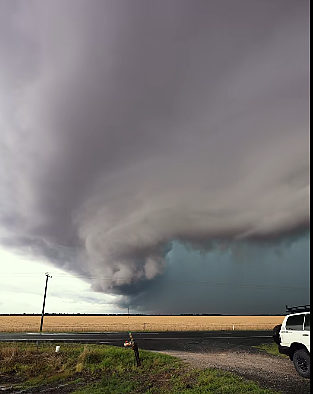
Storm clouds on the Darling Downs on Thursday.
-