
willedoo
-
Posts
7,759 -
Joined
-
Last visited
-
Days Won
140
Content Type
Profiles
Forums
Gallery
Downloads
Blogs
Events
Our Shop
Movies
Everything posted by willedoo
-
It would help Harris a lot if they kept Biden sedated at home until the election is over.
-
Not long to go now. I'm not a betting man but I'm tipping a Trump victory.
-
That leaping was me, not the toad.
-
I had a run in with a cane toad tonight. He jumped onto my bare foot when I wasn't expecting it, resulting in much leaping and a twisted knee. The toad and two of his mates are no longer here.
-
Paraquat is the one that has been in the news a lot lately with possible links to Parkinson's mentioned. I'd agree on the improper handling part of it. I used to see it here all the time, farmers spraying with no cabs on the tractors, out in the open without a mask, shorts and short sleeved shirts. One farmer with Parkinson's was being interviewed on the ABC radio yesterday and he said that's how he sprayed for years. It's difficult to have sympathy for stupidity. Paraquat in it's concentrated form is very deadly. One young bloke was adding it to a tank and spilled it on the front of a football jersey or some similar tight fitting top he was wearing. His sister found him dead no more that 15 minutes after she last saw him. It appeared he's tried to take the shirt off and passed out by the time he had it up over his face. In another case up north, someone put paraquat in a coke bottle and put it in the fridge. When this bloke had a swig of it, he spat it out but still died in hospital a few days later. I think it wrecks your organs and there's no real antidote for it.
-

Don't get me wrong here, But I LIKE Donald Trump.
willedoo replied to Phil Perry's topic in Politics
Trump's Truth Social stock market valuation is now greater than the estimated value of Musk’s Xcrement. https://www.theguardian.com/business/2024/oct/29/truth-social-trading-suspended -
I'm not sure whether it was a statewide directive from the Greens in the Queensland election, but in my region all the roadside corflute signage for the Greens had them dressed up in khaki uniform. It was a bit comical with them all looking like the Irwins in the Australia Zoo ads. The signage made it look a bit fake, but then again most campaign signage looks a bit dodgy. I can just see Adam Bandt sitting in the Qantas Chairman's Lounge with his short sleeve khaki shirt on.
-
Day three and the sky hasn't fallen in yet.
-
I better not show that to my feathered mate; he'll expect cake instead of the dog pellets.
-
Celebrating Positives (offset of the Gripes Thread)
willedoo replied to Jerry_Atrick's topic in General Discussion
Seeing $1,300 would have been a bit of a shock. -
You learn a lot on this forum. I've always pulled the Honda engine onto compression when not using it, but this afternoon I gave the muffler a squirt as noted.
-
That would be wishful thinking on Luka's part. The Belarusian military is one that the Russians really could beat. They're not much better than Kadyrov's TikTok warriors.
-
Another thing I'm getting used to is WhatsApp. So far I only use it for calls to friends who don't have a very good signal for a normal mobile phone calls. They get a lot of dropouts so use WhatsApp for calls whenever they can.
-
Jerry, what does redundancy in the mobile network mean?
-
With the NBN I get 100GB of data per month with no monthly rollover of unused data for $50 per month. With Aldi for the same price I get 130GB of data, unlimited phone calls and sms in Australia and 30 other countries, plus any unused data rolls over and accumulates. For a single user like myself, the phone data plan so far seems cheaper, faster and more reliable than the NBN. I would think in a multiple user household, the NBN plans would be more suitable.
-
Did you hear about the lady who received a bill in the mail and set fire to it. Her name was Bernadette.
-
My trial of phone data vs the NBN is going ok so far. The phone connection is set to mobile hotspot and wireless from there to the laptop. I've paid for another month on the NBN plan to keep it active until I decide whether or not to ditch it for good. The idea is to do the whole month using only the phone to get an idea of reliability and speed. I've been doing it for a week now and it's passed those tests. The economics and value for money side of it is already well in the phone's favour. So far the occasional times the phone slows a bit or has a drop out for a few seconds is not a problem.
-
I'd vouch for that. I've got a tradie quality Makita drill and also a green cheap range one. The cheap one growled like a 20 year old drill when it was fresh out of the box. The gear quality sounds like it's streets apart.
-
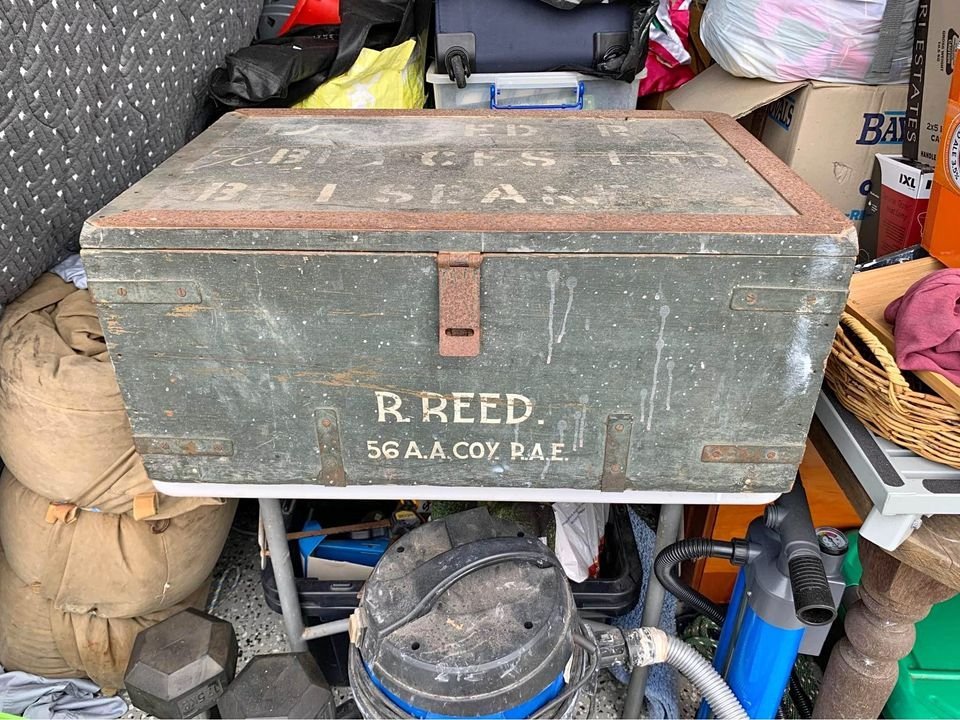
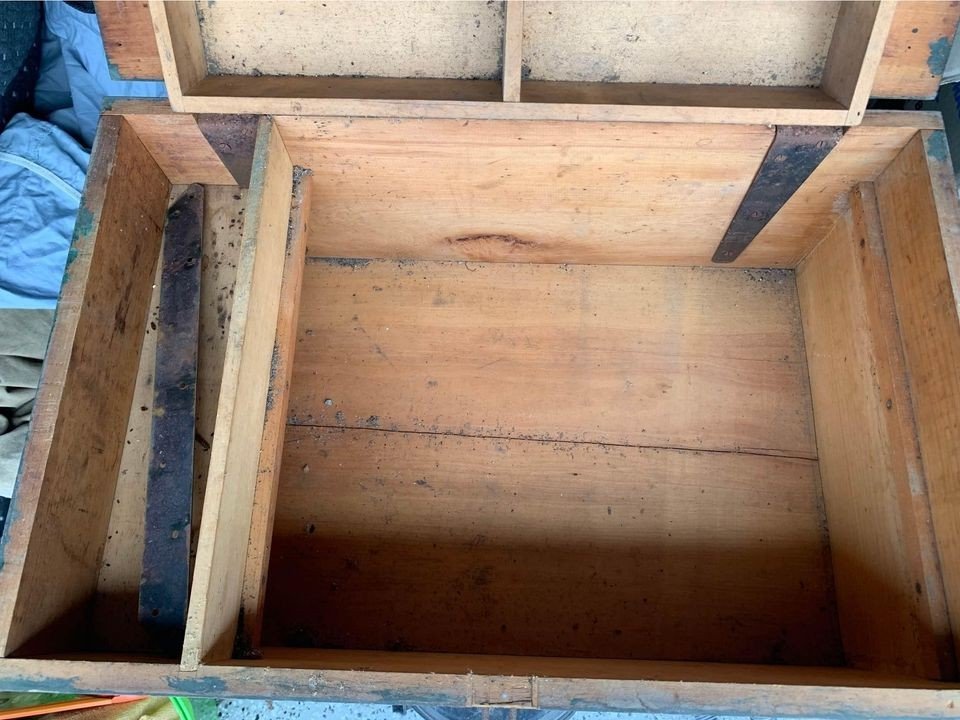
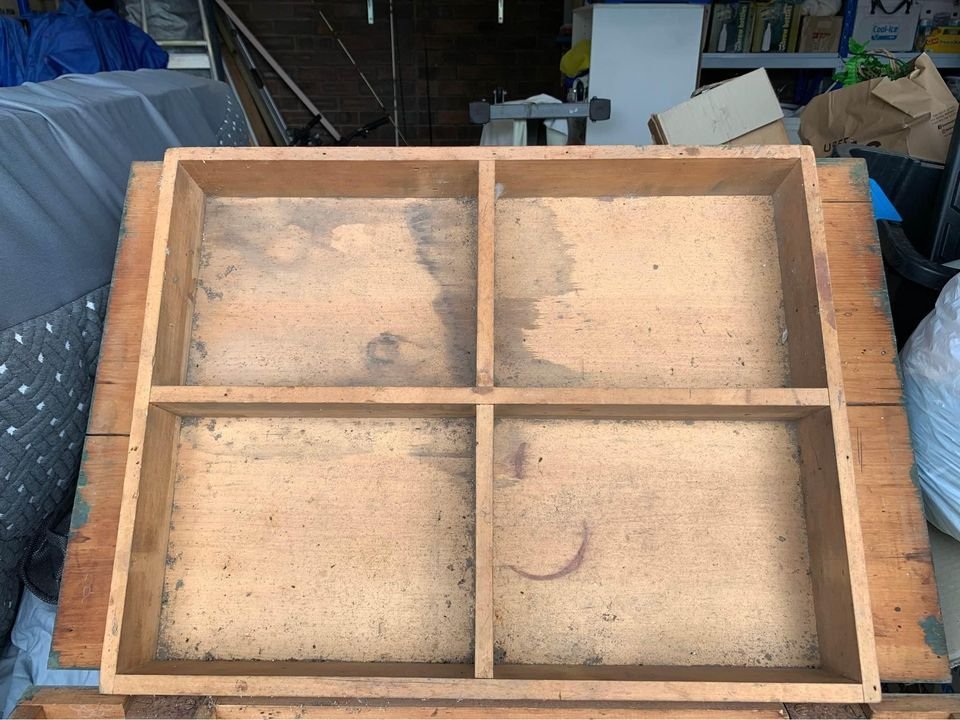
The Army made some nice storage boxes in their day. I saw this Engineer's box on FB Marketplace today. It looks like hoop pine and would have that nice old hoop pine smell no doubt. I have a couple of Army old rifle crates made from hoop pine with the rope handles. Also a few boxes that held some type of actuator. They are mostly plywood, but the timber pieces inside to hold the item in place are hoop pine and some even have red cedar pieces inside them. They used to refit and re-purpose a lot of boxes; you often see the old markings showing under the paint indicating a former use.

-
If Harris wins, I doubt Trump will just fade away. He'll still be there for the term with a large and loony portion of the population totally devoted to him. I can visualise him trying his usual hardest to destabilise the Democrat administration. Whether the Trump infection of the Republican party would continue is a guess. Maybe they'll write him off as a loser, but if he still has a groundswell of Republican voter support his hold on the party will probably remain. A Trump loss means he can still run in 2028. It wouldn't be in Trump's DNA to accept that he might be too old by then. You would normally think that if he declines mentally in the next four years that he would lose support. The problem is, the crazier he gets, the more rusted on his crazy devotees become.
-
It makes you wonder how far the Korean troops would stretch if claimed loss figures of Russians are anything to go by. Estonia's intelligence service is saying Russian losses for October, killed and injured, could reach 40,000. It's hard to imagine such numbers but it's common to hear of battalion sized losses in one day. There's reports that the Koreans aren't highly trained or skilled. Maybe that just means they will fit in well with Russian forces. Other reports have the Koreans arriving in the Kursk region, so possibly they will be used for local defence rather than front line positions. If they go to the front line in Ukraine they might get the same treatment as the convict recruits, of which very few have survived. The main use of the prisoners has been in meat assaults where they send them forward in suicidal assaults so the regular forces can identify Ukrainian artillery positions in order to direct counter-battery fire on them. The interesting part would be the politics of wasting all the Korean troops, although Kim probably doesn't give two hoots about the troops he's sending. He'd be more interested in what he can get from putin in return.
-
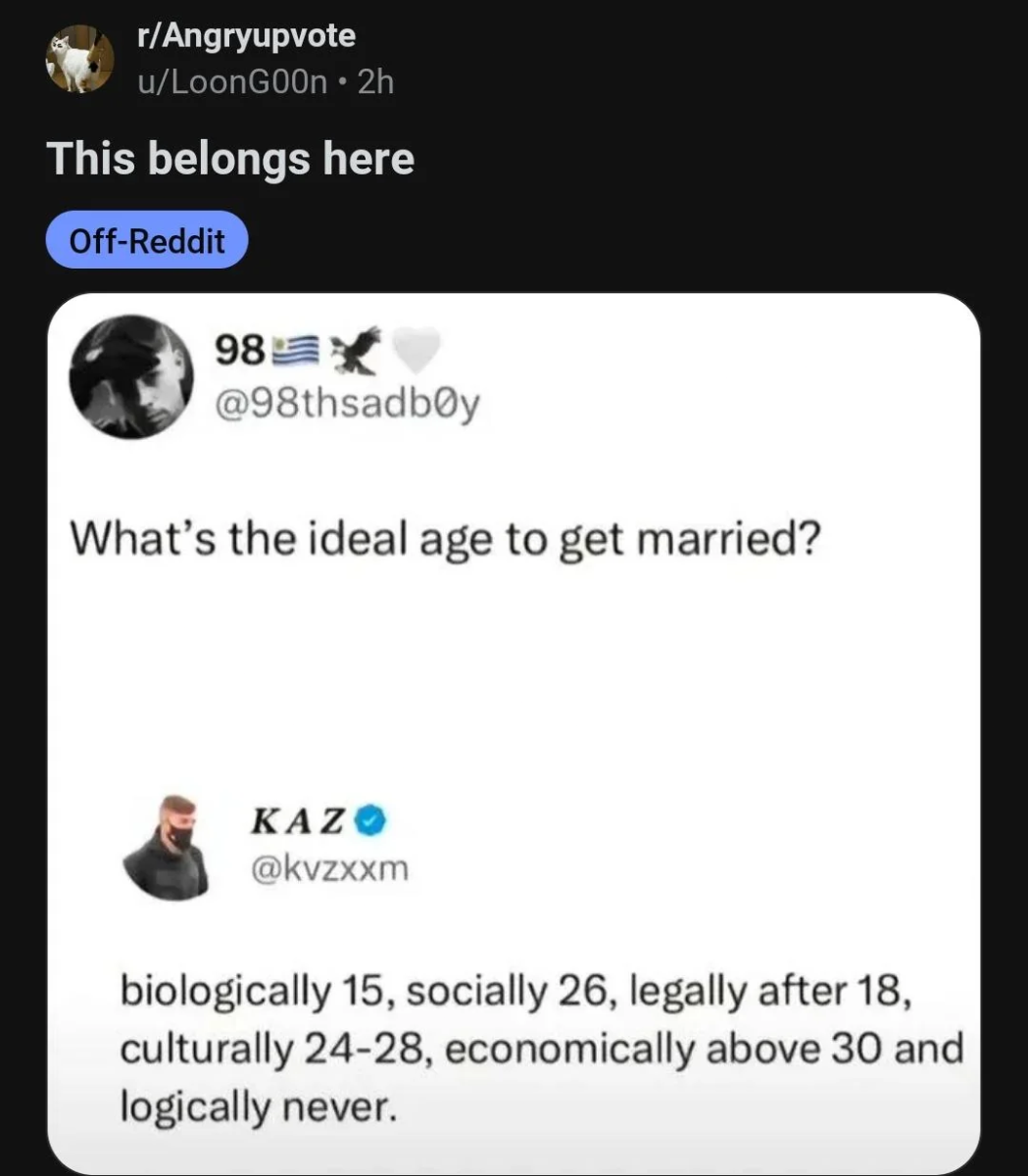
Saw this on Reddit:
-
It's difficult to think of two planes as an airline, particularly when only one of them works.
-
Czech Airlines has shut down after 101 years in operation.
-
There's been a racket going on around here the last few nights. It sounds like a gang of curlews.