willedoo
-
Posts
8,560 -
Joined
-
Last visited
-
Days Won
155
Content Type
Profiles
Forums
Gallery
Downloads
Blogs
Events
Our Shop
Movies
Everything posted by willedoo
-
Cut my finger on a guitar string for the first time ever. The new technique wasn't such a success after all.
-
The best way is to keep whittling them down until they fall apart in a mess, but does Israel and the US have enough readily available stockpiles of munitions to see the distance. The pace of things might depend on who runs out first.
-
The post regime plan put up by the crown prince would be the most workable in my opinion, except for one thing. It could only work if what's left of the military swung behind it. The people are diverse but most just want to live in peace. The problem will be the hard liners and how much control over the arms they have. They've had a lot of power for a long time and won't want to give it up.
-
I saw some footage of one rescued pilot being looked after by Kuwaitis. It said he was in an F-15 but don't know if that was accurate or not. If they are Airforce they would be F-15s, F-18s Marine Corps or Navy. Martin Baker seats in the F-18s, ACES II in the F-15.
-
I think most Iranians would say it's justified. The problem with these things is that we all know how well appeasement works. A lot of people are calling for the whole thing to stop and just go back to more of the same appeasement. If it's ever going to change, at some stage someone has to bite the bullet and have the courage to get rid of the regime. It's good that they've set a goal of regime change instead of the usual half baked adventures kicking the can down the road.
-
It's a mixed up place, the Middle East. Just one example - in Saudi Arabia they don't watch The Flintstones, but the people in Abu Dhabi do.
-
 Having said the above, I'm probably not the best person to be giving advice. I'm retired, own my own acerage property debt free, on my own these days and can live comfortable enough on the age pension. I live in a little slice of paradise and don't have any factors pushing me one way or another. For someone still in the workforce with a career, there would be a lot more things to consider than what I have to.
 -
I'm no expert, but I think sometimes when it's really hard to decide, it's better to do nothing immediately and see how the thinking is later on. A lot of people sell up and regret it at a later date. I was nearly one of them. In 2021, I was selling up and moving interstate. I was at the stage of dealing with agents and almost ready to list the place when some medical issues came along and changed the whole plan. Now a bit over four years later, I'm still here and there's nowhere in the world I'd rather be, so I'm glad I didn't go through with the original plan. I'll never be rich living here but what it has to offer regarding lifestyle is worth it many times over. On the other side of the coin, a mate of mine sold up that same year and moved to a small country town in NSW and he's as happy as a pig in a poke. He doesn't miss his former home of 40+ years at all.
-
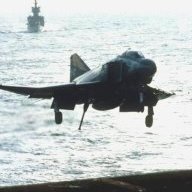
They still have old Tomcats and Phantoms left over from the days of the Shah. I wonder how many of them will be left after this is all over. Iran was the only foreign nation that received Tomcats. Their variant had the same engines as our F-111s. A big part of the reason none of our civilian air museums were allowed to have F-111 engines for display. The Amberley air force museum has a cut-away display engine, but that's under air force control.
-
It surprised me, I would have guessed half that. It must have big city populations.
-
Saudi Arabia's Crown Prince has authorised a full military response from Saudi armed forces if Iran attacks them again.
-
I only ever rode an old Bonneville once and only for a few k's down the road. I remember the vibration was very noticeable after being used to the isolastic setup on the Commando. I also had a ride on a Norton SS and it was a beautiful handling bike. The only issue was that it had a very annoying vibration that kicked in around 55 to 60mph, right where you would want to sit on the speed limit. To have a comfortable ride, you had to slow down or go over the speed limit.
-
Not in the footage I saw, there were heaps of women and very few wearing head coverings. But that was footage taken by citizens and posted on social media, so it might have been from a prodominately anti-government suburb and maybe not representative of what you see in other areas.
-
Maybe you don't have Specsavers in the UK.
-
Jerry, I'm curious, what's the deal with those roadsign sized numberplates on bikes in the UK. Here in Queensland we have plates 7&1/2" x 4".

-
There is a slight difference. Putin controls the world's biggest nuclear force and Iran probably doesn't have one to their name. Nobody really knows how many of Putin's crackers will actually work when the time comes, but I don't think anyone wants to find out.
-
I see that the home of former Iranian President I'madinnerjacket was blown up.
-
You're right about the resale price Nev. You see a lot on marketplace with relatively low prices.
-
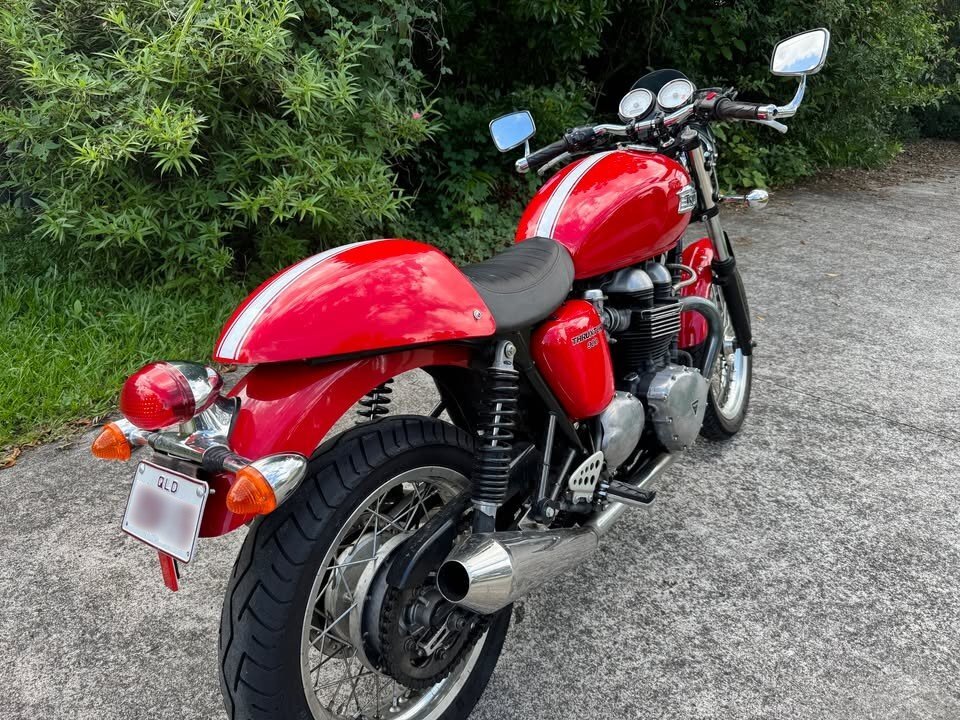
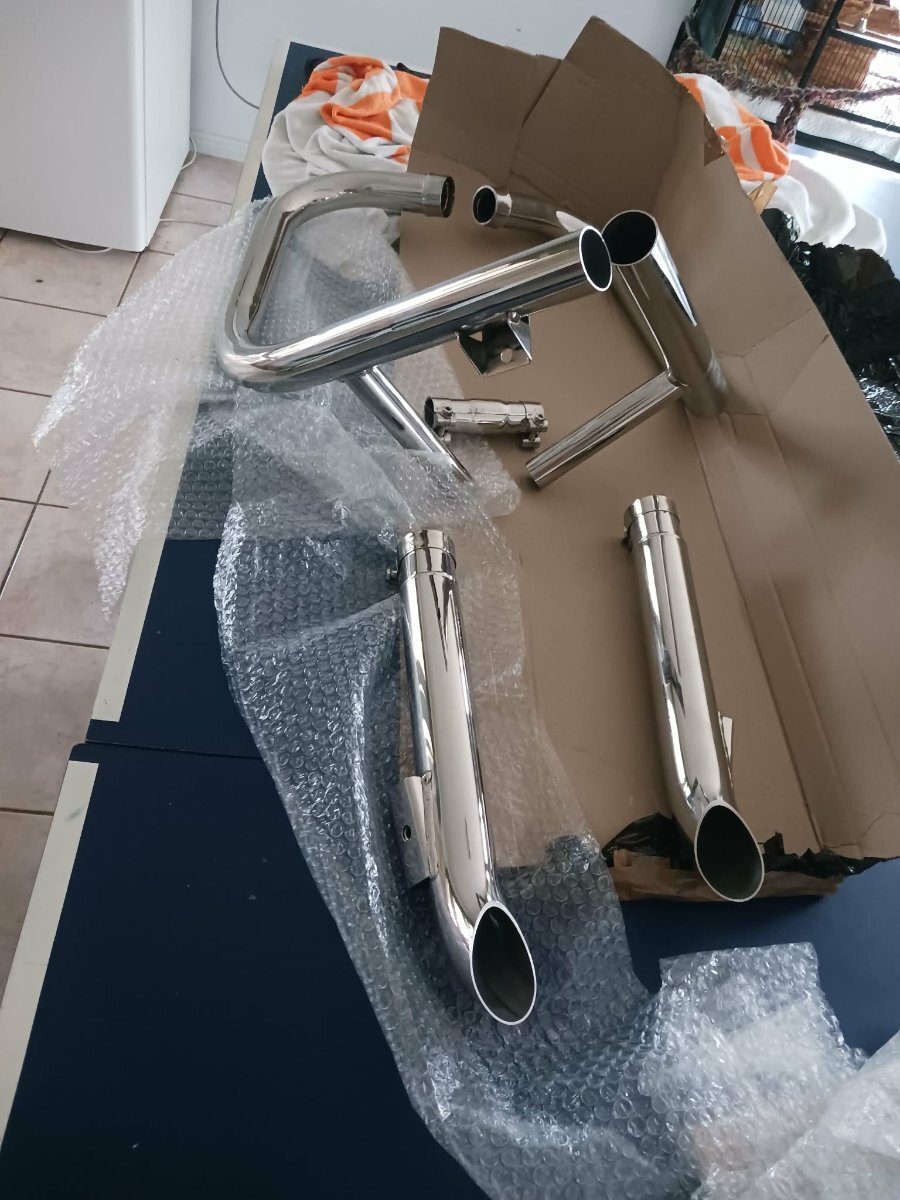
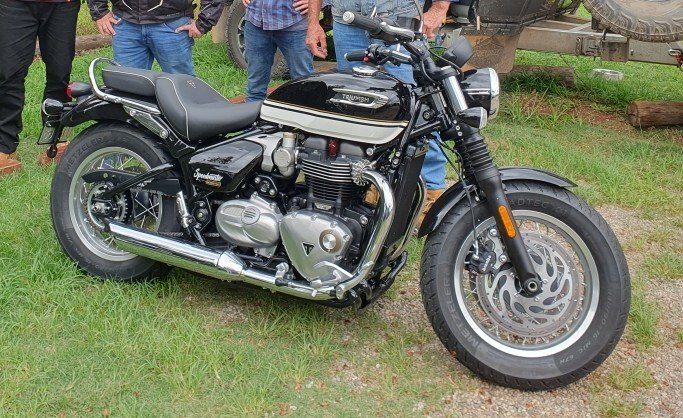
This is a bit off topic, but I suppose it's slightly related to a previous discussion we had about noisy Harleys with straight through pipes. A mate received his new Verex slash cut drag pipes in the mail on Friday to fit to his two month old Bonneville Speedmaster. They make them in brushed, polished (bright chrome) and black ceramic finishes. He went for the polished finish as it will fit in with the existing chrome on the bike. I think they will get fitted on Monday. The photos show the drag pipes unpacked and the bike with the standard Triumph mufflers. It will be interesting to hear how loud it is; with the Triumph mufflers it sounds like a sewing machine. It's been a long journey. Me and the mate started out making mud pies and playing with plastic toy soldiers, graduated on to slot cars and now we all have bigger toys. Maybe we'll finish off with wheelchair races in the nursing home.
-
It will be interesting to see how it pans out. The regime has never been weaker than at present. If the US/Israel alliance has good enough intelligence on the ground, they might be able to get a fair bit done in the short term with air power striking military infrastructure and the ongoing takeout of command. If the regime survives that, the next logical step would be some breathing space at the negotiating table. Both sides know that's never going to work but it gives them time.
-
Hopefully the job will be finished and not left to fester again. The turning point will be how to get the military to swing and I don't know how that will go with the revolutionary guard. They seem to be a fairly dedicated bunch.
-
The Patriot crews will be getting some practice.
-
Why is inexpensive electricity so expensive?
willedoo replied to Grumpy Old Nasho's topic in Science and Technology
Sometimes I think I'd like to be off grid, but with the amount of mains power I use it's still the cheapest option by far. When I got the power on in 1994, it only cost me $5,000. The power company will run the power free of charge a maximum of 30 metres into the property (owner supplies the pole). From there I have 100 metres overhead which was $2,000, and from there about 250 metres of underground cable which was $3,000. With the three phases, that's four 35mm underground cables, so I'd hate to guess what the cost would be these days. If it was all overhead I probably could have got away with single phase, but over that distance it's good to share the load over two phases. It didn't cost much extra for the third phase cable so I got it put in for a couple of reasons. At the time I thought it was good to have in case I ever decided to run any three phase equipment, and even though I'll probably never use it for that purpose, the fourth underground cable is good insurance in case one of the two I use is ever knocked out by lightning or some other reason. Half the underground section runs up the centre of the driveway, so wiring in the unused fourth cable is a cheap fix if I lose a cable. Touch wood it hasn't happened but when the old underground copper phone line was in use, I had to get Telstra out a few times to replace phone cable from lightning strikes. It hits trees and travels down the roots to zap the cable. -
Jerry, 95% of Iranians are followers of Islam. They are Persians not Arabs, is the more correct way to describe them.
-
Why is inexpensive electricity so expensive?
willedoo replied to Grumpy Old Nasho's topic in Science and Technology
I'm not sure whether smart meters are available down our road. In theory you would think it would be a much better, more efficient way of doing it. All in all over the years, I've had a fairly good run with meter reads. When Energex did it themselves it worked good. They had Energex employees in Suzuki 4wd vehicles that could access all the rural properties. When Cleanaway took over, they didn't want to tackle rural driveways so they'd leave a card in the letterbox saying they couldn't get access and would estimate it. The only irritating thing about it was the BS they'd put on the card as the reason they couldn't access the property, eg: weather when it was a perfectly sunny day, dog on premises when there is no dog etc.. I was glad when they eventually stopped leaving the cards with the fairy stories. Back when Energex used to read the meters, I had a visit one day from a bloke who had come to investigate if I was stealing power. What it was is that I have 3 phase power but the third phase is not connected to the meter as I don't have any 3 phase equipment and only use the outlets from the other two. Every meter read it would show up as two meters with a reading and one was always still on zero. Once I explained the situation, they were happy and I never heard any more about it again.